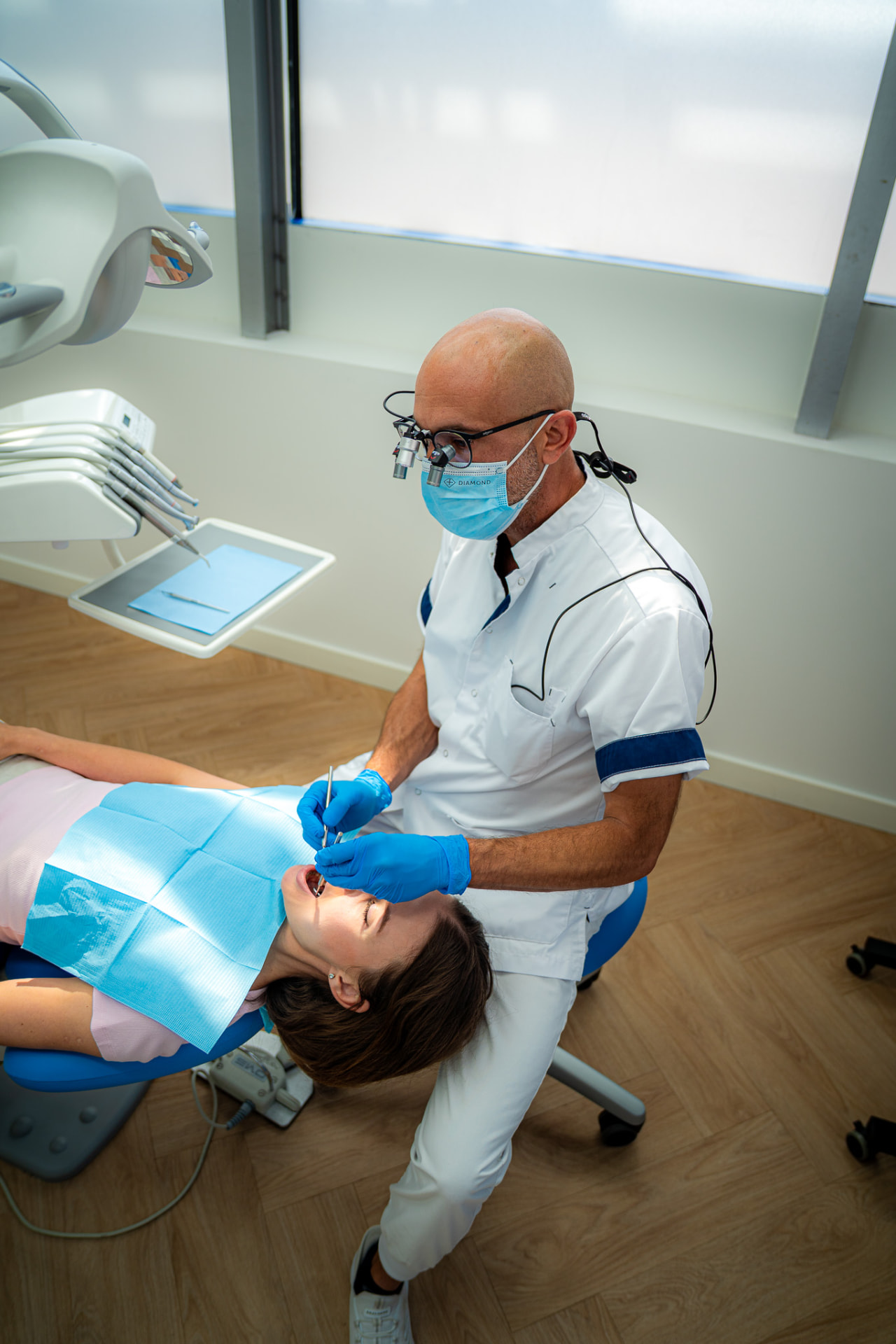
Implantology
Dental implants in Schiedam and Rotterdam: planned for a natural result
A missing tooth can affect your smile, chewing, and jawbone. With an implant, you replace a tooth in a permanent and natural way, without preparing the adjacent teeth. At 3D Tandarts, we digitally prepare every implant treatment with a CBCT scan, an intraoral scan, and specialized planning software. This ensures that the implant is placed exactly where the new crown works best. We treat patients from Schiedam, Rotterdam, and the surrounding area, right at Schiedam Centrum train station.
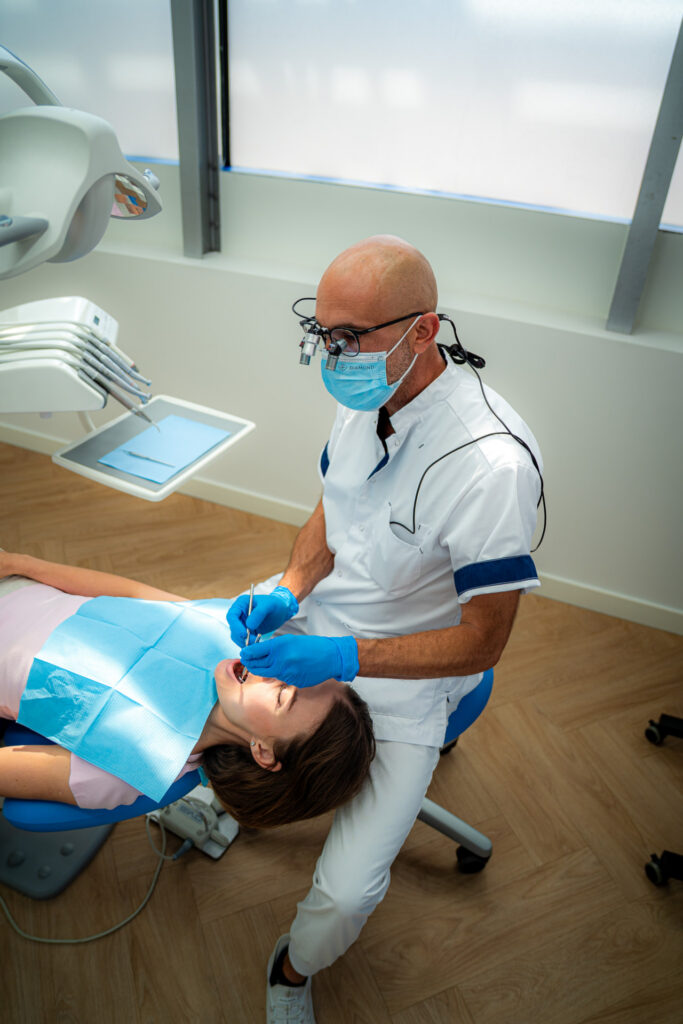
What is a dental implant?
An implant is an artificial tooth root, usually made of titanium, that is placed in the jawbone. Once the implant has integrated, a crown, bridge, or removable denture can be attached to it. An implant feels and functions almost like a natural tooth and helps preserve the jawbone after tooth loss.
The advantages:
- A permanent replacement for a missing tooth
- A natural appearance and good chewing function
- Healthy adjacent teeth do not need to be prepared
- Helps to preserve the jawbone
- Comfortable when speaking and eating
Implant or bridge?
For a bridge, the teeth adjacent to the gap are prepared so that they can support the bridge. This results in the loss of healthy tooth tissue, and a bridge is often more difficult to keep clean. An implant only replaces the missing tooth, keeps the adjacent teeth intact, and is usually easier to clean. Which solution suits you depends on your situation. The dentist will discuss this with you.
Our approach: prosthetically driven implant planning
We first determine the ideal position of the final restoration – the crown you will see and chew with. Only then do we plan the implant position, so that function, aesthetics and cleanability are right from the start.
An implant is often placed in the spot where there is the most bone. But that spot is not always the best place for the crown. The result can be a crooked crown, unfavorable stress, a less attractive result, or a crown that is difficult to keep clean.
That is why we work the other way around. First we determine the ideal position of the new tooth, then we digitally plan the implant there. This is called prosthetically guided implantology. This way we aim for:
- a natural and beautiful result
- a good distribution of the chewing forces
- an implant that is easy to keep clean
- less chance of problems in the long term
Guided implant surgery: how do we plan digitally?
With us, an implant is not placed ‘by eye.’ We plan the treatment digitally in advance:
- CBCT scan (3D X-ray): a three-dimensional image of the jaw. This shows us how much bone there is and where nerves, the maxillary sinus, and the roots of the adjacent teeth are located.
- Digital planning: in special software we determine the position, angle, and depth of the implant, tailored to the new crown and your bite.
- Surgical guide: when indicated, we use a custom-made surgical guide to transfer the digital implant plan accurately to the clinical procedure.
What does this mean for you? You have a clearer understanding in advance of what to expect, nerves and other structures are well protected, the treatment is precise and predictable, and the procedure is often less stressful.
Does getting an implant hurt?
Many patients find the procedure less severe than expected. Because of the local anesthesia, you usually do not feel anything from the procedure itself during the treatment. Afterwards, you may have some temporary pain and swelling, as with other dental procedures.
How long does an implant last?
With good oral care and regular check-ups, an implant can last many years. Its lifespan depends, among other things, on your oral hygiene, smoking, your general health, the load, and professional check-ups.
How much does a dental implant cost?
An implant with a crown usually costs from €2,000. The final amount depends on the type of crown or restoration, the amount of bone, any additional treatments, and the number of implants. During the consultation, you will receive a personal treatment plan with a clear budget.
Is an implant suitable for you?
Not everyone is automatically eligible. We always assess the amount and quality of the jawbone, the condition of the gums, your overall health, your oral hygiene, and whether you smoke (smoking increases the risk). Sometimes an additional treatment is needed beforehand, such as bone grafting, a sinus lift, or gum treatment. We always discuss that in advance.
How does dental implant treatment proceed?
- Intake and examination: we look at your situation and discuss the possibilities.
- 3D scan and digital planning: we make a CBCT scan and plan the implant digitally.
- Placement of the implant: when indicated, using a surgical guide.
- Placing the crown: the definitive crown is attached.
Also read more about the CBCT scan, the intraoral scan, Digital Smile Planning, and the snap denture.
Implantologist at Schiedam Centrum station, near Rotterdam
3D Tandarts is located directly at Schiedam Centrum station, easily accessible from Rotterdam, Vlaardingen, Delft, and Maassluis. Convenient for commuters, professionals, and expats: your appointments can be easily combined with your workday, and on Wednesdays we are open until 8:00 PM.
Why choose 3D Tandarts?
- Digital precision and careful planning
- Modern equipment
- Personal attention
- Clear explanation and transparent costs
Carefully assessed
A carefully planned replacement
We examine your teeth, gums and jaw and discuss your wishes. Digital imaging can support a precise, personal treatment proposal.
Our approach
A clear process
Digital diagnostics and modern techniques are used where appropriate. We explain each step before you make a decision together with the dentist.
What matters
- Careful examination before treatment
- Clear explanation of options and alternatives
- Planning tailored to your personal situation
Frequently asked questions
Dental implant
What is the difference between traditional and digital implantology?
In digital implantology, the treatment is planned in advance with a 3D scan and, if necessary, carried out using a surgical guide. This makes the treatment more accurate and predictable.
How long should I wait after having a tooth pulled?
That depends on your situation. Sometimes an implant can be placed immediately, sometimes the area must heal first.
Can an implant fail?
Yes, that is possible, but the chance is small. Risk factors include smoking and inadequate oral hygiene.
Is an implant treatment safe?
An implant is a commonly used and well-researched treatment. Careful planning and execution, good oral hygiene, and regular check-ups reduce the risk of problems.
Can an implant also support a bridge or removable denture?
Yes. In addition to a single crown, implants can also support a bridge or secure a denture, such as a snap-in denture. What is possible in your situation will be discussed by the dentist after an examination.

Discuss your situation
Request an appointment. The dentist will assess which care suits your situation.